
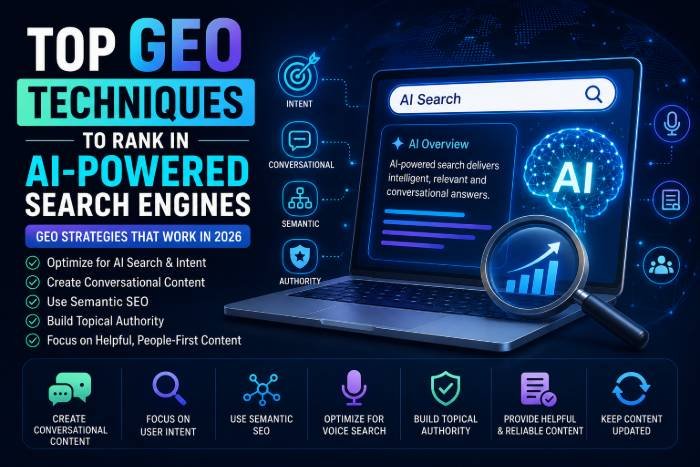
Top GEO Techniques to Rank in AI-Powered Search Engines
The world of search is changing rapidly in 2026. Artificial intelligence is transforming how search engines understand content and deliver results to users. Traditional SEO strategies are no longer enough to maintain strong visibility online because modern search systems now focus more on user intent, conversational search, and helpful content.
Today, AI-powered search engines are designed to provide direct answers instead of simply displaying website links. This major shift has introduced a new approach called Generative Engine Optimization (GEO).
GEO is becoming one of the most important digital marketing strategies for businesses, bloggers, and content creators who want to rank in AI-driven search environments.
This article explains the top GEO techniques that can help websites improve visibility in AI-powered search engines naturally and effectively.
Table of Contents
What is GEO?
Generative Engine Optimization (GEO) is the process of optimizing content for AI-powered search systems and conversational AI platforms.
Unlike traditional SEO, GEO focuses on:
- User intent
- Conversational content
- Semantic relevance
- Helpful information
- AI readability
The goal of GEO is to help content appear in:
- AI-generated answers
- Voice search results
- Conversational search experiences
- AI summaries and recommendations
As AI search becomes more advanced, GEO is becoming essential for long-term digital visibility.
1. Create Conversational Content
One of the most important GEO techniques is writing content in a natural and conversational style.
Modern users search using full questions instead of short keywords.
For example:
Instead of:
- “best SEO tips”
Users now ask:
- “What are the best SEO strategies for AI-powered search engines?”
AI systems understand natural language, which means content should sound human and easy to understand.
Tips for conversational content:
- Use simple language
- Write naturally
- Answer questions directly
- Use question-based headings
Conversational content improves both user engagement and AI understanding.
2. Focus on User Intent
Traditional SEO focused heavily on keyword optimization. GEO focuses more on understanding why users are searching.
AI search engines analyze:
- What users need
- What problem they want to solve
- What type of answer they expect
This means content should provide meaningful and helpful solutions rather than just repeating keywords.
Example:
Instead of only targeting:
- “AI SEO”
Create content explaining:
- What AI SEO is
- How it works
- Why businesses need it
- Best AI SEO strategies
Content that satisfies user intent performs better in AI-powered search results.
3. Use Semantic SEO
Semantic SEO is one of the core foundations of GEO.
AI search systems understand topics and relationships between concepts instead of relying only on exact keyword matches.
For example, an article about GEO may naturally include:
- AI search
- Conversational SEO
- Voice search optimization
- User intent
- Semantic content
This helps AI systems understand the overall meaning of your content.
Benefits of semantic SEO:
- Better topic relevance
- Improved contextual understanding
- Stronger visibility in AI search results
4. Optimize for Voice Search
Voice search usage is growing rapidly due to AI assistants and smart devices.
Voice searches are usually:
- Conversational
- Longer
- Question-based
For example:
Instead of typing:
- “SEO trends”
Users ask:
- “What are the latest SEO trends in 2026?”
To optimize for voice search:
- Use natural language
- Add FAQ sections
- Answer common questions clearly
- Use conversational phrases
Voice-friendly content performs better in AI-powered search engines.
5. Build Topical Authority
AI systems prefer websites that demonstrate expertise and authority on specific topics.
Instead of publishing random articles, focus on creating topic clusters around related subjects.
Example:
If your website focuses on AI SEO, create content about:
- GEO strategies
- AI-powered search
- Semantic SEO
- Voice search optimization
- Google algorithm updates
This helps search engines understand that your website is a trusted source of information.
Ways to build authority:
- Publish high-quality content regularly
- Cover topics deeply
- Share practical insights
- Keep information updated
Authority-driven websites usually perform better in AI-generated search results.
6. Improve Content Structure
Well-structured content is easier for both users and AI systems to understand.
Modern AI search engines prefer content that is:
- Organized
- Clear
- Easy to scan
Best practices:
- Use headings and subheadings
- Keep paragraphs short
- Use bullet points where necessary
- Avoid overly complicated language
Structured formatting improves readability and AI interpretation.
Tips: Join Gen-AI Powered Digital Marketing Courses in Pune
7. Prioritize Helpful Content
Helpful content is one of the strongest ranking signals in modern AI search systems.
Search engines now reward content that:
- Solves user problems
- Provides useful information
- Offers real value
- Answers questions clearly
Low-quality or overly automated content is becoming less effective.
Helpful content should:
- Be original
- Be informative
- Include practical insights
- Focus on user experience
People-first content performs better in AI-powered search environments.
8. Use Natural Keyword Placement
Keyword stuffing no longer works effectively in AI-driven search systems.
Instead, use keywords naturally throughout the content.
AI systems understand context and meaning, so excessive keyword repetition is unnecessary.
Good GEO practice:
- Use keywords naturally in headings
- Include related phrases
- Write for humans first
Natural keyword placement improves readability and search relevance.
9. Optimize for Featured Snippets and AI Answers
AI-powered search engines often display summarized answers directly in search results.
To improve your chances of appearing in these summaries:
- Provide direct answers
- Use concise explanations
- Add FAQ sections
- Structure content clearly
AI systems prefer content that quickly answers user questions.
10. Keep Content Updated
AI search engines prefer fresh and relevant content.
Regularly updating articles helps:
- Improve accuracy
- Maintain relevance
- Increase trust signals
Updating old content with new information and trends can improve visibility significantly.
Why GEO is Important in 2026
Search engines are becoming more conversational and AI-driven every year.
Businesses that continue using only old SEO methods may struggle to maintain visibility.
GEO helps businesses:
- Adapt to AI-powered search
- Improve user engagement
- Increase search visibility
- Build long-term authority
It is becoming one of the most important digital marketing strategies for the future.
Future of AI-Powered Search
The future of search will become:
- More conversational
- More personalized
- More intent-focused
- More AI-driven
Websites optimized for GEO will have a major advantage in this evolving digital landscape.
Conclusion
Generative Engine Optimization (GEO) is transforming how websites rank in AI-powered search engines. Traditional SEO still matters, but AI systems now prioritize helpful, conversational, and context-rich content.
The most effective GEO techniques include:
- Conversational writing
- User intent optimization
- Semantic SEO
- Voice search optimization
- Helpful content creation
- Structured formatting
- Authority building
Businesses and content creators who adopt these GEO strategies early will gain stronger visibility, better engagement, and long-term success in the future of AI-driven search.