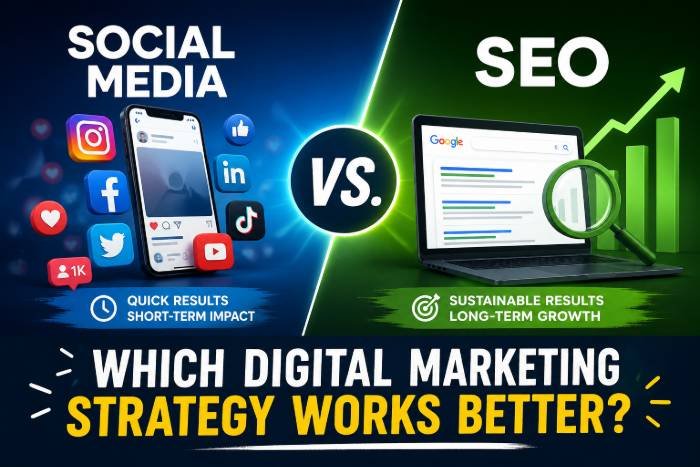
Social Media vs. SEO Which Digital Marketing Strategy Works Better?
Table of Contents
Understanding the Basics of Digital Marketing
Digital marketing today feels a bit like standing at a crossroads with too many signboards pointing in different directions. Should you invest your time building an Instagram following, or should you focus on ranking your website on Google? It’s a question that businesses of all sizes struggle with, especially when budgets and time are limited. The truth is, both social media marketing and SEO (Search Engine Optimization) play crucial roles, but they operate in very different ways.
Think of digital marketing as a conversation. Social media is like a lively party where everyone is talking, sharing, and reacting in real time. SEO, on the other hand, is more like a library where people go with specific questions and expect precise answers. Both environments are valuable, but they serve different purposes and audiences.
According to recent statistics, over 4.9 billion people use social media globally, while Google processes more than 8.5 billion searches per day. These numbers alone show that both channels offer massive opportunities. However, success depends on how well you understand their strengths and limitations.
Businesses often make the mistake of treating social media and SEO as competitors when in reality, they are more like teammates. One helps you build relationships and visibility quickly, while the other builds authority and long-term traffic over time. The real question isn’t which one is better universally—it’s which one works better for your specific goals.
So before diving deeper, it’s important to understand what each strategy actually involves and how they function in the digital ecosystem.
Note: Join Our Digital Marketing Classes in Pune for Practical Training
What is Social Media Marketing?
Social media marketing is all about connecting with people where they already spend a huge chunk of their time—platforms like Instagram, Facebook, TikTok, LinkedIn, and X (formerly Twitter). It’s less about selling immediately and more about creating conversations, building relationships, and establishing a brand personality that people can relate to.
Imagine walking into a crowded café where everyone is chatting, laughing, and sharing stories. That’s exactly what social media feels like. Brands that succeed here are the ones that don’t just talk about themselves but engage with their audience in meaningful ways. They reply to comments, participate in trends, and create content that resonates emotionally.
What is Search Engine Optimization (SEO)?
If social media is a bustling party, SEO is the quiet, strategic process of making sure your content shows up exactly when someone needs it. It’s about understanding what people are searching for and positioning your website as the best possible answer.
SEO revolves around optimizing your website so that search engines like Google can easily understand and rank your content. This involves a mix of keyword research, content creation, technical optimization, and link building. It may sound technical, but at its heart, SEO is about providing value.
Think about the last time you searched for something online. Maybe it was “best laptops for students” or “how to start a small business.” You probably clicked on one of the top results without scrolling too far. That’s the power of SEO—being visible at the exact moment someone is looking for information.
The Core Differences Between Social Media and SEO
When you place social media marketing and SEO side by side, the contrast becomes immediately clear. It’s almost like comparing a sprint to a marathon. One is fast, reactive, and constantly changing, while the other is steady, strategic, and built for endurance. Understanding these differences is what helps businesses stop guessing and start making smarter marketing decisions.
At a fundamental level, social media thrives on interruption. People aren’t actively searching for your product when they scroll through Instagram or TikTok—you’re competing for attention in a crowded feed. SEO, on the other hand, is intent-driven. Users are already looking for something specific, and your job is to be the best answer to their query.
Traffic Generation Methods
Traffic is the lifeblood of any digital marketing strategy, but how social media and SEO generate that traffic couldn’t be more different. Social media is like casting a wide net into a fast-moving river—you might catch a lot quickly, but the flow never stops, and you need to keep casting.
When you post content on social media, you’re relying on algorithms to distribute it to your audience and beyond. Engagement plays a huge role here. The more likes, comments, and shares your content receives, the more visibility it gains. This creates a snowball effect where a single post can potentially go viral and drive massive traffic in a short time.
SEO, on the other hand, works more like building a well-positioned storefront on a busy street. Instead of chasing traffic, you attract it consistently by ranking for relevant keywords. When someone types a query into Google, your content appears as a solution, bringing in visitors who are already interested in what you offer.
Timeframe for Results
If patience isn’t your strong suit, social media marketing might feel more rewarding at first. You can create a post today and see results almost instantly—likes, shares, comments, and even sales within hours. This immediacy makes social media incredibly appealing, especially for new businesses trying to gain traction quickly.
SEO, however, operates on a completely different timeline. It’s not uncommon for businesses to wait three to six months before seeing significant improvements in search rankings. In competitive industries, it can take even longer. This delay often discourages people who expect quick wins.
Benefits of Social Media Marketing
Social media marketing has transformed the way brands communicate with their audiences. It’s no longer just about broadcasting messages—it’s about building relationships, telling stories, and creating experiences that people want to be part of. In many ways, social media has humanized brands, making them more approachable and relatable.
One of the most powerful aspects of social media is its ability to create a sense of community. When people follow your brand, they’re not just interested in your products—they’re interested in your voice, your values, and your personality. This emotional connection can be incredibly valuable, especially in competitive markets.
Instant Engagement and Brand Awareness
One of the standout advantages of social media marketing is its ability to generate instant engagement. Unlike SEO, where results take time, social media allows you to connect with your audience in real time. You post something, and within seconds, people can react, comment, and share it with others.
This immediacy is incredibly powerful for building brand awareness. A single viral post can introduce your brand to thousands—or even millions—of people overnight. It’s like flipping a switch and suddenly being in the spotlight.
Engagement also provides valuable insights. By observing how people interact with your content, you can quickly understand what works and what doesn’t. This feedback loop allows you to refine your strategy and create more effective campaigns.
Note: Join Our Digital Marketing Training in Pune for Practical Learning
Benefits of SEO
When people talk about SEO, they often focus on rankings and keywords, but the real value runs much deeper. SEO is not just a tactic—it’s an investment in your brand’s long-term visibility, credibility, and authority. Unlike social media, where attention comes and goes like waves, SEO builds a foundation that keeps working even when you’re not actively promoting it.
One of the most compelling aspects of SEO is how it aligns with user intent. When someone searches for something on Google, they are actively looking for answers, solutions, or products. This means that the traffic you receive through SEO is highly targeted and often more likely to convert. You’re not interrupting someone’s day—you’re helping them solve a problem.
Another major benefit is scalability. Once your content starts ranking, it can attract thousands of visitors without additional effort or cost per click. This makes SEO one of the most cost-effective marketing strategies over time. According to industry insights, organic search drives over 50% of all website traffic, making it the largest single source of traffic for most businesses.
Long-Term Organic Traffic
If social media is like renting attention, SEO is like owning property. Once your website ranks well on search engines, it can generate a steady stream of traffic without ongoing promotion. This is what makes SEO such a powerful long-term strategy.
Imagine publishing a blog post today and having it bring in visitors not just tomorrow, but for months or even years. That’s the beauty of organic traffic. It compounds over time, meaning that each piece of content you create adds to your overall visibility.
Unlike paid ads, where traffic stops the moment you stop spending, SEO continues to deliver results. This makes it especially valuable for businesses looking to maximize their return on investment. While the initial effort may be high, the long-term payoff can be substantial.
Credibility and Trust Building
There’s something inherently powerful about appearing on the first page of Google. Users tend to trust search engines, and by extension, they trust the websites that rank highly. This makes SEO a key driver of credibility and authority.
Think about it—when was the last time you clicked on the second or third page of search results? Most people don’t. Studies show that the top three results receive the majority of clicks, which means that ranking well not only increases visibility but also signals trustworthiness.
SEO also encourages the creation of high-quality, informative content. By answering users’ questions and providing valuable insights, you position your brand as an authority in your field. Over time, this builds trust with your audience.
Challenges of Social Media Marketing
While social media marketing offers exciting opportunities, it’s not without its challenges. Many businesses jump in expecting quick success, only to realize that maintaining momentum is harder than it seems. The same platforms that provide visibility can also create unpredictability and pressure.
One of the biggest challenges is the constant demand for content. Social media thrives on freshness, which means you need to consistently produce new posts, videos, and stories. This can be time-consuming and creatively exhausting, especially for small teams.
Another issue is competition. With millions of brands and creators vying for attention, standing out requires more than just good content—it requires exceptional content. This raises the bar and makes it harder to achieve organic reach.
Algorithm Dependency
One of the most frustrating aspects of social media marketing is its reliance on algorithms. These algorithms determine what content gets seen and what gets buried, and they can change without warning.
You might spend hours creating the perfect post, only to see it reach a fraction of your audience. This unpredictability can be discouraging, especially when results don’t match effort.
Algorithms prioritize engagement, which means that content needs to perform well quickly to gain visibility. This creates pressure to produce content that is not only high-quality but also immediately engaging.
Short Content Lifespan
Content on social media has a surprisingly short shelf life. A post that performs well today might be forgotten tomorrow, buried under a constant stream of new content. This makes it difficult to achieve lasting impact.
Unlike SEO content, which can continue to attract traffic over time, social media posts often require continuous promotion to stay relevant. This creates a cycle where you need to keep producing content to maintain visibility.
The fast-paced nature of social media also means that users consume content quickly and move on. Capturing and retaining attention becomes increasingly challenging.
This short lifespan can be particularly frustrating for businesses that invest significant time and resources into content creation. The return on that investment may be limited if the content doesn’t perform well immediately.
Note: Join Our Digital Marketing Courses in Pune with Placement for Practical Training & Jobs
Challenges of SEO
While SEO offers long-term rewards, it’s not some magical traffic machine you can switch on overnight. In fact, if you go into SEO expecting quick results, you’re setting yourself up for frustration. It’s a slow, methodical process that demands patience, consistency, and a willingness to adapt.
One of the biggest hurdles is the sheer level of competition. No matter what niche you’re in, chances are there are already established websites dominating the search results. These sites often have years of authority, thousands of backlinks, and entire teams dedicated to maintaining their rankings. Trying to outrank them can feel like climbing a mountain with no clear peak in sight.
Slow Results and Competition
One of the most common frustrations with SEO is how long it takes to see results. Unlike social media, where you can get immediate feedback, SEO requires patience. You might publish high-quality content and optimize it perfectly, yet still wait weeks or months before seeing any significant movement in rankings.
This delay is partly due to how search engines work. Google needs time to crawl, index, and evaluate your content. It also considers factors like domain authority and backlinks, which take time to build. If you’re competing against established websites, the process becomes even slower.
Competition adds another layer of complexity. Popular keywords are often dominated by big brands with strong online presence. Trying to rank for these keywords can feel like competing in a race where others have a massive head start.
Constant Algorithm Updates
If there’s one thing you can count on in SEO, it’s change. Search engines, especially Google, frequently update their algorithms to improve user experience and deliver better results. While this is beneficial for users, it can be challenging for businesses trying to maintain their rankings.
Some updates are minor and go unnoticed, while others—like Google’s core updates—can significantly impact search rankings. A website that was performing well yesterday might suddenly see a drop in traffic, leaving business owners scrambling to understand what went wrong.
This constant evolution means that SEO strategies need to be flexible. What worked a year ago might not be effective today. Staying updated with the latest trends and best practices is essential for long-term success.
Cost Comparison: Social Media vs. SEO
When it comes to budgeting, the debate between social media marketing and SEO becomes even more interesting. At first glance, social media might seem cheaper—or even free—while SEO appears more complex and resource-intensive. But the reality is a bit more nuanced.
Social media allows you to start with minimal investment. You can create profiles, post content, and engage with your audience without spending a dime. However, as competition increases, organic reach often declines. This pushes businesses toward paid advertising to maintain visibility.
Paid social media campaigns can deliver quick results, but they come at a cost. You pay for impressions, clicks, or conversions, and once you stop spending, the traffic stops too. It’s like renting visibility—you get exposure as long as you keep paying.
Paid Ads vs. Organic Growth
The contrast between paid advertising and organic growth highlights the fundamental difference between social media and SEO. Paid ads on social media platforms can generate immediate traffic and conversions. You can target specific audiences, set budgets, and see results almost instantly.
However, this speed comes with a price. The cost of ads can add up quickly, especially in competitive industries. Cost-per-click (CPC) rates vary widely, but in some niches, they can be quite high. This makes it essential to carefully manage budgets and optimize campaigns.
Organic growth on social media is possible, but it’s becoming increasingly difficult due to algorithm changes. Platforms prioritize content that generates engagement, and even then, reach can be limited.
Which Strategy is Better for Your Business?
So, after all this analysis, you might still be wondering: which one should you choose—social media or SEO? The honest answer is that it depends entirely on your business goals, resources, and timeline.
If you’re launching a new product or trying to build brand awareness quickly, social media is your best bet. It allows you to reach a large audience in a short amount of time and generate immediate engagement.
On the other hand, if your goal is to create a steady stream of traffic and establish long-term authority, SEO is the way to go. It’s particularly effective for businesses that rely on content, such as blogs, e-commerce sites, and service providers.
Choosing Based on Business Goals
Every business is different, and your marketing strategy should reflect that. Start by asking yourself a few key questions: Are you looking for quick results or long-term growth? Do you have the resources to invest in content creation and optimization? Who is your target audience, and where do they spend their time?
For example, a fashion brand might benefit more from social media, where visual content thrives. In contrast, a software company might see better results with SEO, targeting users searching for specific solutions.
It’s also important to consider your budget. If you have limited funds, focusing on organic strategies like SEO and content marketing can provide better returns over time. If you have a larger budget, combining paid social media campaigns with SEO can maximize your reach and impact.
Combining Social Media and SEO for Maximum Impact
Instead of viewing social media and SEO as competing strategies, think of them as complementary tools. When used together, they can amplify each other’s strengths and create a more effective overall marketing strategy.
For instance, you can use social media to promote your SEO content, driving traffic and increasing visibility. At the same time, high-quality SEO content can provide valuable material for your social media posts.
Social signals—such as shares and engagement—can also indirectly impact SEO by increasing brand visibility and attracting backlinks. While they may not be direct ranking factors, they contribute to your overall online presence.
Conclusion
Choosing between social media marketing and SEO isn’t about picking a winner—it’s about understanding how each fits into your overall strategy. Social media offers speed, engagement, and visibility, while SEO provides stability, credibility, and long-term growth.
If you rely solely on social media, you risk being at the mercy of algorithms and fleeting trends. If you focus only on SEO, you might miss out on immediate opportunities for engagement and brand building.
The most effective approach is to strike a balance. Use social media to connect with your audience and generate buzz, and leverage SEO to create a strong foundation that supports sustained growth.
In the end, success in digital marketing comes down to adaptability. The landscape is constantly evolving, and the businesses that thrive are the ones that stay flexible and open to change.
Also Read – How Search Engines Are Changing Digital Marketing Rules?