Hybrid Learning in Digital Marketing | Benefits & Practical Exposure
The way people learn digital marketing has changed a lot in recent years. Classroom training alone is no longer enough, and fully online courses often don’t provide students with enough hands-on support. This has led to hybrid learning, a new approach that combines the convenience of online classes with the benefits of in-person interaction. As businesses use more AI, automation, and data-driven marketing, professionals need a learning method that builds both theory and practical skills.
Recent industry reports indicate that AI-powered marketing, personalised learning, and hybrid education are becoming the standard across marketing institutes and organisations. According to HubSpot’s 2026 State of Marketing report, AI search optimisation and personalised digital experiences are among the top priorities for marketers, making continuous skill development more important than ever.
Whether you are a student, entrepreneur, freelancer, or working professional, hybrid learning offers an efficient path to mastering digital marketing while balancing your existing commitments
Table of Contents
What Is Hybrid Learning in Digital Marketing?
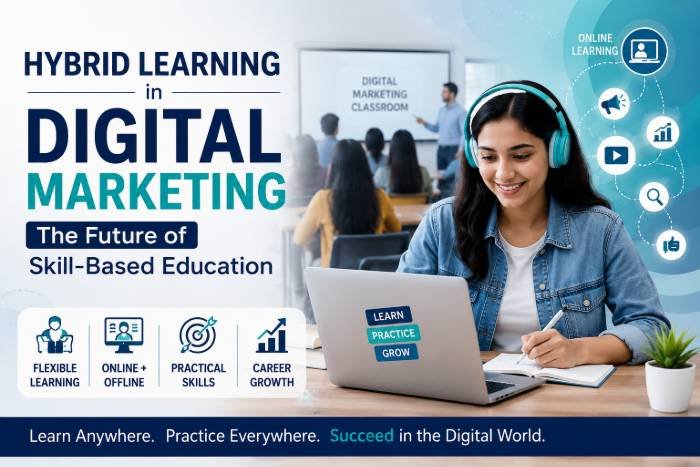
Hybrid learning is a teaching approach that combines online lessons with in-person classroom sessions. Instead of using just one method, students get recorded videos, live online classes, hands-on tasks, classroom workshops, and personal guidance.
Unlike regular classroom learning, hybrid learning lets students study theory whenever they want. Classroom time is then used for hands-on work, discussions, clearing doubts, and group projects. This helps students remember better because they use what they learned online right away.
Educational institutions worldwide are increasingly adopting this format because it provides flexibility without sacrificing quality. Marketing education experts also predict that hybrid learning will remain the preferred model because it balances convenience with hands-on experience.
Understanding the Hybrid Learning Model
A typical hybrid digital marketing course includes:
- Recorded online lessons
- Live instructor-led virtual sessions.
- Offline classroom workshops
- Practical assignments
- Industry case studies
- Live campaign execution
- Placement preparation
- AI-based learning tools
Students can revisit recorded sessions multiple times while still benefiting from face-to-face mentoring.
Why It Is Becoming Popular
Digital marketing changes almost every month. Google changes how its search works, Meta adds new ad features, and AI tools keep changing how content is made and campaigns are run. Hybrid learning lets schools update lessons fast online while still holding hands-on workshops in person.
Research also shows that today’s marketers need skills in AI, automation, data analysis, and managing real campaigns, not just theory.
Benefits of Hybrid Learning
One of the main benefits of hybrid learning is flexibility. Students don’t have to pick between full-time study and their jobs. They can learn online on weekdays and join classroom sessions on weekends or at planned workshops.
Hybrid learning also helps students remember better. Watching recorded videos explains ideas, while classroom time strengthens learning through talks, real projects, and teacher feedback.
Another big advantage is personalised learning. Everyone learns in their own way. Some like to see things, while others learn by doing. Hybrid learning fits different learning styles, making education work better.
Flexibility for Students and Professionals
Working people often find it hard to go to daily classes. Hybrid learning solves this by letting them study when it fits their schedule without affecting their jobs.
Students preparing for college examinations can also continue learning digital marketing alongside their academics.
Better Practical Exposure
Digital marketing is not just about theory. Employers want people who can run ad campaigns, improve websites, study reports, and plan marketing strategies.
Hybrid courses usually include:
| Learning Component | Purpose |
|---|---|
| Online Videos | Learn concepts |
| Live Classes | Ask questions |
| Classroom Sessions | Hands-on practice |
| Live Projects | Build experience |
| Internship | Industry exposure |
This balanced approach develops job-ready skills.
Improved Networking Opportunities
Offline workshops allow students to interact with trainers, classmates, industry experts, and recruiters. These relationships often lead to internships, freelance projects, and employment opportunities that are difficult to build through online-only education.
Join Our Hybrid Mode Digital Marketing Course
Key Components of a Hybrid Digital Marketing Course
A good hybrid digital marketing program mixes technology with hands-on learning.
Online Self-Paced Learning
Recorded lessons offer great flexibility. Students can pause, replay, and review difficult topics as many times as they want.
These modules generally include:
- SEO
- Google Ads
- Meta Ads
- Email Marketing
- Content Marketing
- AI Marketing
- Marketing Automation
Learning at your own pace takes away the stress of keeping up with the class speed.
Offline Classroom Sessions
In-person sessions focus on doing tasks instead of just listening to lectures.
Students typically learn how to:
- Build WordPress websites
- Perform SEO audits
- Launch Google Ads campaigns
- Create Meta advertisements
- Analyse Google Analytics reports
- Use AI tools for content generation.
These classroom activities connect learning with real-world practice.
Live Projects and Case Work: Working on real projects is one of the most valuable parts of hybrid education.
Students work on:
- Business websites
- SEO optimization
- Google Ads campaigns
- Social media marketing
- Lead generation
- E-commerce marketing
- Performance marketing
Employers always prefer candidates who have worked on real projects before finishing their studies.
AI-Powered Learning Tools
Artificial Intelligence has changed digital marketing education.
Students now use AI tools for:
- Keyword research
- Content generation
- Image creation
- Ad copywriting
- SEO optimization
- Analytics reporting
- Customer segmentation
Industry reports show that AI-driven marketing is becoming a key need for companies, so knowing AI is important for future marketers.
Skills You Learn Through Hybrid Learning
Hybrid learning prepares students for multiple career paths.
SEO and AI Search Optimisation
Search Engine Optimisation is still one of the most in-demand digital marketing skills. Today’s SEO experts also need to know AI Search Optimisation, Answer Engine Optimisation (AEO), and how to improve content for AI-powered searches.
Modern SEO includes:
- Keyword research
- Technical SEO
- On-page SEO
- Off-page SEO
- Local SEO
- AI search optimization
Performance Marketing: Performance marketing focuses on measurable results for the business.
Students learn:
- Google Ads
- Meta Ads
- Campaign optimization
- Conversion tracking
- Budget management
- ROI analysis
Businesses want marketers who can bring in real revenue, not just more website visitors.
Social Media Marketing
Social media is more than just sharing pictures now.
Students gain expertise in:
- Instagram marketing
- Facebook advertising
- LinkedIn marketing
- YouTube marketing
- Content strategy
- Community building
Short videos and real, honest content keep getting the most attention on social media.
Analytics and Automation
Using data to make decisions is what sets professional marketers apart from beginners.
Students learn tools such as:
- Google Analytics 4
- Google Tag Manager
- Looker Studio
- CRM platforms
- Marketing automation software
These skills help marketers track how well their campaigns are doing.
How to Choose the Right Hybrid Digital Marketing Course
Choosing the right school is about more than just the price.
Look for:
| Feature | Why It Matters |
|---|---|
| Updated AI Curriculum | Industry relevance |
| Live Projects | Practical skills |
| Experienced Trainers | Better mentorship |
| Placement Support | Career opportunities |
| Certifications | Resume value |
| Flexible Batches | Learning convenience |
| Internship | Real-world experience |
Before enrolling, attend a demo session, review the syllabus, and check whether the institute regularly updates its curriculum to keep pace with industry trends.
Conclusion
Hybrid learning is the future of digital marketing education because it mixes flexibility, hands-on experience, expert guidance, and modern AI-based learning. Instead of picking between classroom and online learning, students get the best of both.
As digital marketing keeps changing with AI, automation, and data analysis, professionals need to keep improving their skills. A good hybrid digital marketing course gives practical experience, industry know-how, and confidence to succeed in today’s tough job market. Whether you want to be a digital marketer, freelancer, entrepreneur, or business owner, hybrid learning is a strong path for long-term career growth. What is hybrid learning in digital marketing?
Hybrid learning combines online recorded lessons, live virtual sessions, and offline classroom training to provide flexible and practical digital marketing education.