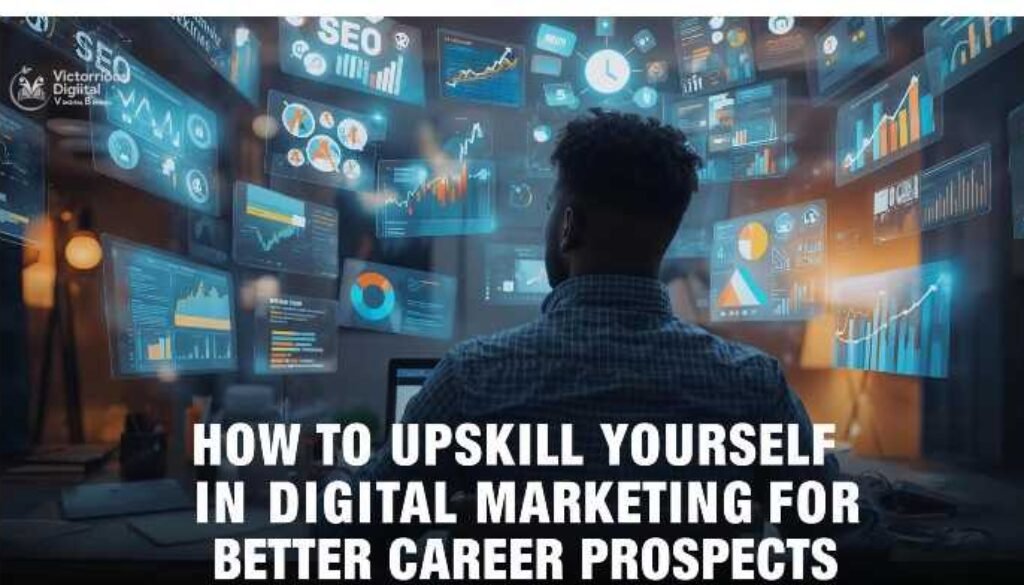
How to Upskill Yourself in Digital Marketing for Better Career Prospects?
Table of Contents
Introduction: Why Digital Marketing Skills Matter More Than Ever
Let’s be honest—career landscapes today don’t look anything like they did a decade ago. Jobs are evolving faster than ever, industries are transforming overnight, and traditional career paths are no longer guaranteed. In the middle of all this change, digital marketing has emerged as one of the most in-demand and future-proof skill sets you can invest in. Whether you’re a student, a working professional, a business owner, or someone considering a career switch, upskilling yourself in digital marketing can open doors you never imagined.
Why? Because businesses live online now. From small local shops to global brands, everyone is fighting for attention on search engines, social media platforms, email inboxes, and websites. And guess who helps them win that attention? Digital marketers. Companies aren’t just looking for degrees anymore—they’re hunting for skills, results, and adaptability. That’s exactly where digital marketing shines.
The best part? You don’t need a fancy background or years of experience to get started. Digital marketing rewards curiosity, creativity, and consistency more than anything else. If you’re willing to learn, experiment, and stay updated, this field can offer high-paying roles, remote work opportunities, freelancing freedom, and long-term career growth.
In this blog, we’ll break down exactly how you can upskill yourself in digital marketing, step by step, practically and realistically. No fluff. No buzzwords. Just a clear roadmap to help you build skills that actually improve your career prospects and income potential.
Note: Join Our Digital Marketing Courses for Practical Training
Digital Marketing as a Career: Why Should You or Not?
What Is Digital Marketing?
Digital marketing is essentially the act of using the internet to promote products, services, or brands. Included you have search engines, websites, social media platforms, email, mobile apps, and even online ads. However, digital marketing is not a single skill. That ecosystem is a group of diverse, but closely linked skills coming together to help promote visibility, build engagement, and drive conversions.
Digital marketing covers SEO (getting websites to rank on Google), content marketing (making useful blogs, videos, and posts), social media marketing (creating audiences and awareness), email marketing (nurturing leads), and bought ads (driving traffic directly in exchange for ads). All of the above areas have their own depths, tools, and career pathways.
The beauty of digital marketing is that it mixes creativity with logic. And one minute you are writing an attractive title, and the next one, you are analyzing the data of what worked and what did not. So, it is not repetitive, it is not boring , and it moves on constantly with technology and the behavior of the users.
Why Companies Are Actively Hiring Digital Marketers
The shift from offline to online marketing isn’t a trend—it’s a permanent transformation. Consumers research products online, compare reviews, follow brands on social media, and make buying decisions through digital touchpoints. Businesses know this, and that’s why digital marketers are no longer “optional hires”—they’re essential.
Companies need professionals who can:
- Increase website traffic
- Generate quality leads
- Improve brand visibility
- Drive online sales
- Analyze performance and optimize campaigns
Traditional advertising methods are expensive and hard to measure. Digital marketing, on the other hand, is cost-effective, scalable, and measurable. That’s why startups, SMEs, and large corporations alike are investing heavily in digital marketing talent.
Career Opportunities in Digital Marketing
One of the biggest advantages of upskilling in digital marketing is the sheer variety of career options available. You’re not stuck with one role forever. As your skills grow, you can explore paths like:
- SEO Specialist
- Content Marketer
- Social Media Manager
- Performance Marketer
- Email Marketing Specialist
- Digital Marketing Manager
- Growth Marketer
- Marketing Analyst
- Freelancer or Consultant
And the cherry on top? Many of these roles offer remote work flexibility, global opportunities, and competitive salaries. Digital marketing truly allows you to design a career that fits your lifestyle.
Assessing Your Current Skill Level
Identifying Skill Gaps
Before you start learning everything under the sun, pause for a moment. Upskilling isn’t about collecting random skills—it’s about building the right skills strategically. The first step is understanding where you currently stand.
Ask yourself:
- Do I understand how search engines work?
- Can I create content that engages an audience?
- Do I know how to analyze data and measure results?
- Am I comfortable using digital tools and platforms?
Be honest with yourself. You don’t need to be perfect, but clarity will save you time and frustration. Skill gaps are not weaknesses—they’re opportunities.
Beginner vs Intermediate vs Advanced Marketers
If you’re a beginner, your focus should be on understanding the basics—terminologies, channels, and fundamental strategies. Intermediate marketers should aim to sharpen execution skills, work on real projects, and learn analytics. Advanced marketers focus on strategy, automation, leadership, and scaling campaigns.
Knowing your level helps you choose the right courses, projects, and career goals without feeling overwhelmed.
Setting Clear Career Goals
Upskilling without a goal is like driving without a destination. Do you want a job? A promotion? A freelance career? A career switch? Your goal will shape what skills you prioritize.
For example:
- If you want a job, focus on practical skills and certifications.
- If you want to freelance, focus on client acquisition and portfolio building.
- If you want leadership roles, focus on strategy and analytics.
Clarity here makes everything else easier.
Core Digital Marketing Skills You Must Learn
Search Engine Optimization (SEO)
SEO is the backbone of digital marketing. It’s what helps websites rank on search engines like Google and bring in organic traffic without paying for ads. Learning SEO is like planting seeds that grow over time—it’s slow, but the results are powerful and long-lasting.
SEO involves keyword research, on-page optimization, technical SEO, content strategy, and link building. You’ll also learn how search engines think and how users behave online. SEO skills are highly valued because they directly impact traffic and revenue.
When you understand SEO, you’re not just guessing—you’re making data-driven decisions. And that’s gold in the digital world.
Note: Join Our Digital Marketing Training in Pune for Practical Training
Content Marketing
Content is everywhere. Blogs, videos, podcasts, social posts—you name it. But good content isn’t about writing a lot; it’s about solving problems and building trust. Content marketing teaches you how to communicate value in a way that attracts and retains an audience.
You’ll learn storytelling, audience research, content planning, and performance measurement. Strong content skills make you valuable across industries because every brand needs a voice.
Social Media Marketing
Social media isn’t just about likes and followers—it’s about building relationships. Platforms like Instagram, LinkedIn, Facebook, and X are powerful tools when used strategically.
Social media marketing teaches you branding, engagement strategies, community management, and analytics. It also sharpens your creativity and trend awareness. For many brands, social media is the first point of contact with customers—making this skill incredibly important.
Email Marketing
Despite what some people think, email marketing is far from dead. In fact, it offers one of the highest returns on investment in digital marketing. Learning email marketing helps you understand customer journeys, personalization, and automation.
You’ll learn how to write emails that don’t end up in spam, how to nurture leads, and how to convert subscribers into loyal customers.
Paid Advertising (PPC & Social Ads)
Paid advertising is all about speed and precision. Platforms like Google Ads and Meta Ads allow marketers to reach highly targeted audiences instantly. Learning paid ads teaches you budgeting, targeting, A/B testing, and conversion tracking.
It’s a high-responsibility skill, but also one of the highest-paying digital marketing skills when done right.
How to Advance a Career in Digital Marketing with Top Skills?
After you have honed your fundamental digital marketing skills, it is time to rise beyond execution and begin thinking strategically. The difference between mediocre marketers and top-performing marketers who earn higher salaries, hold leadership and management positions, and enjoy long-term career security is often advanced digital marketing skills. Have an emphasis on optimization, automation, data intelligence, and future-ready technologies.
Marketing Automation
Marketing automation is related to working smarter rather than harder. But, with growth comes the need for a little automation: you can no longer juggle every lead, every email, or every customer interaction. Automation tools enable marketers to plan, organize, and view diverse marketing practices from entry ways to continuously reach segmented, targeted audiences while keeping the benefits of personalization for increasingly large target groups.
When you do marketing automation, you learn how to:
Build automated email sequences
Create lead scoring systems
Nurture prospects based on behavior
Align marketing with sales teams
Marketers can create sophisticated workflows easily without code using tools such as HubSpot, ActiveCampaign, and Mailchimp. Automating this process can ensure efficiency and a high return on investment, so this skill is beneficial to any company that wants to grow.
Conversion Rate Optimization (CRO)
Traffic alone doesn’t pay the bills—conversions do. CRO teaches you how to turn website visitors into leads, subscribers, or customers. This skill is all about psychology, user behavior, and testing.
You’ll learn how to:
- Optimize landing pages
- Improve website user experience
- Conduct A/B tests
- Analyze heatmaps and user journeys
Even small improvements in conversion rates can dramatically increase revenue. Professionals who understand CRO are highly respected because they directly impact business performance.
Analytics and Data Interpretation
Data is the language of digital marketing. If you can’t measure it, you can’t improve it. Advanced marketers don’t just collect data—they interpret it to make smarter decisions.
Learning analytics means understanding tools like Google Analytics, Google Search Console, and platform insights. You’ll learn how to track:
- User behavior
- Campaign performance
- Conversion paths
- ROI and KPIs
This skill transforms you from a “doer” into a decision-maker. Companies trust marketers who can back ideas with data, not gut feelings.
AI and Digital Marketing Tools
Artificial intelligence is reshaping digital marketing faster than most people realize. From AI-powered content tools to predictive analytics and chatbots, marketers who understand AI gain a massive competitive advantage.
You don’t need to be a tech expert—but you should know how to use AI responsibly to:
- Improve productivity
- Enhance personalization
- Optimize campaigns
- Analyze trends faster
AI won’t replace marketers, but marketers who use AI will replace those who don’t.
Choosing the Right Learning Resources
Upskilling is only effective when you learn from the right sources. With endless courses and tutorials online, choosing quality resources can feel overwhelming. The key is to focus on practical, updated, and industry-relevant learning.
Free vs Paid Learning Platforms
Free resources are excellent for beginners. Blogs, YouTube videos, and free courses can help you understand concepts without financial pressure. However, free content often lacks structure and depth.
Paid courses, on the other hand, offer:
- Structured learning paths
- Updated curriculum
- Practical assignments
- Certifications
The smartest approach is a mix—start free, then invest in paid learning once you’re confident about your direction.
Online Courses and Certifications
Certifications validate your skills and improve your credibility, especially when applying for jobs. Platforms like Google, Meta, HubSpot, and Coursera offer industry-recognized certifications.
Certifications won’t guarantee a job, but they:
- Strengthen your resume
- Show commitment to learning
- Help you stand out in interviews
Focus on learning, not just collecting certificates.
Note: Join Our Online Digital Marketing Certification Training Program
Blogs, Podcasts, and YouTube Channels
Staying consistent with learning is easier when it’s engaging. Blogs, podcasts, and videos help you stay updated with trends, algorithm changes, and real-world insights.
Follow industry experts, not just brands. Their experiences, failures, and strategies often teach more than textbooks ever could.
Building Hands-On Experience
Knowledge without practice is useless. Digital marketing is a performance-driven field—results matter more than theory. The fastest way to upskill is by applying what you learn in real-world scenarios.
Personal Projects and Blogs
Start your own blog, Instagram page, or YouTube channel. This gives you complete freedom to experiment, fail, and learn. You’ll understand SEO, content creation, analytics, and promotion from the inside out.
Employers love candidates who’ve built something on their own—it shows initiative and passion.
Freelancing and Internships
Freelancing platforms and internships help you gain practical exposure while earning or learning. Even unpaid internships can be valuable if they offer hands-on work and mentorship.
Real clients teach you lessons no course ever will—deadlines, communication, revisions, and accountability.
Real-World Case Studies
Document your work. Track results. Analyze what worked and what didn’t. Case studies turn your experience into proof. They show employers and clients that you don’t just know digital marketing—you can deliver results.
Creating a Strong Digital Marketing Portfolio
A portfolio is your digital resume. It speaks before you do. In a competitive job market, a strong portfolio can instantly set you apart.
What to Include in Your Portfolio
Your portfolio should showcase:
- Projects you’ve worked on
- Skills you’ve used
- Tools you’re familiar with
- Problems you solved
Even personal or mock projects count if they demonstrate skill.
Showcasing Results and Metrics
Numbers build trust. Show traffic growth, conversion rates, engagement improvements, or ROI. Results tell employers that you understand performance, not just theory.
Personal Branding Strategies
Your online presence matters. Optimize your LinkedIn profile, share insights, write posts, and engage with industry discussions. Personal branding positions you as a professional before you even apply for jobs.
Staying Updated with Industry Trends
Digital marketing changes fast. Algorithms update, platforms evolve, and strategies shift. Continuous learning is not optional—it’s survival.
Following Industry Leaders
Follow marketers who actively work in the field. Their insights help you stay ahead of changes and understand real-world applications.
Joining Digital Marketing Communities
Communities expose you to discussions, job opportunities, and collaborations. Learning from peers accelerates growth.
Attending Webinars and Events
Webinars and virtual events offer fresh perspectives and networking opportunities. They keep your knowledge current and relevant.
Soft Skills That Boost Your Digital Marketing Career
Technical skills get you hired. Soft skills help you grow.
Communication and Storytelling
Marketing is communication. Whether it’s a campaign idea or a report, clear communication builds trust and influence.
Creativity and Problem-Solving
Algorithms change, budgets shrink, competition increases. Creativity helps you adapt and find solutions when things don’t go as planned.
Time Management and Adaptability
Deadlines, multitasking, and fast-paced environments are part of the job. Adaptability keeps you relevant in an ever-changing industry.
Leveraging Certifications for Better Job Prospects
Google, Meta, HubSpot Certifications
These certifications validate your understanding of the platforms businesses actually use. They’re especially helpful for beginners.
Do Certifications Really Matter?
Certifications open doors—but skills keep them open. Employers care more about what you can do than what you’ve memorized.
Job Search Strategies for Digital Marketers
Building a Resume That Stands Out
Focus on skills, tools, and results—not generic responsibilities. Tailor your resume for each role.
Networking and LinkedIn Optimization
Most opportunities come through connections. Be active, helpful, and visible.
Preparing for Interviews
Be ready to explain strategies, tools, and results. Confidence comes from practice and experience.
Freelancing vs Full-Time Career in Digital Marketing
Pros and Cons of Freelancing
Freelancing offers flexibility and income potential, but requires self-discipline and consistency.
Agency vs In-House Roles
Agencies offer variety and fast learning. In-house roles offer stability and deep brand involvement.
Common Mistakes to Avoid While Upskilling
Learning Without Practice
Ignoring Analytics
Chasing Too Many Skills at Once
Focus, practice, and patience are key.
Future of Digital Marketing Careers
Emerging Trends and Technologies
AI, voice search, personalization, and automation will dominate the future.
How to Stay Future-Proof
Learn continuously, adapt quickly, and stay curious.
In Conclusion: The Road To Digital Marketing Success
Building skills in digital cannot be a one-time thing. This is the essence of this field, it is the presence of easy accessibility & flexible working nature & growth potential. You can develop a career that grows alongside technology (instead of being replaced by it), and all that it takes is the right mindset, consistent practice, and strategic learning.
Start small. Stay consistent. Get better at the skills that create value. Digital marketing is not about doing everything perfectly — it is about progress.
Also Read: – Why You Should Learn Digital Marketing 2026?